How Wellness-Focused Housing Delivers Long-Term Value for Residents and Investors
By homz | July 7, 2025

Over the past few years, wellness communities have been at the forefront of real estate not only as a trend in lifestyle but as a shrewd investment option. Like never before, individuals are seeking residences that foster their health, happiness, and well-being. And investors are certainly listening. The emergence of wellness-focused housing is rebranding what value looks like for residents and real estate investors alike.
The Evolution of Wellness in Housing
Traditionally, a home was just a shelter. Today, it has become a sanctuary. Global change to a healthy lifestyle and the emergence of wellness property is an industry of more than $ 275 billion globally, as per the Global Wellness Institute, and it affects how the home is being developed. Residents of society who focus on welfare, stability, and social relationships are only prioritized in architectural aesthetics.
In the United States, large companies such as Homz Global involve welfare in their design plans. This development in the housing industry offers everything from green public places and training facilities to non-toxic materials and deliberate architectural purposes, all of which contribute to increasing society’s health benefits and long-term satisfaction.
Why Wellness Communities Are a Smart Investment
From an investment perspective, well communities do more than give emotional and physical well-being—they create long-term value. Here’s why:
- Greater Property Appreciation: Residences in wellness-oriented developments consistently appreciate more over the long term. A 2023 research report by the Global Wellness Institute states that well-being properties capture price premiums ranging from 10% to 25% compared to similar properties within the same market. Why? Because demand is growing faster than supply. Individuals are more and more eager to pay a premium for attributes that foster physical and mental well-being.
- Reduced Turnover and Increased Retention: Another of the frequently neglected benefits of wellness-based sustainable real estate is increased tenant or homeowner satisfaction. People living in areas that benefit from the increased quality of life are more likely to remain, which reduces sales and operating expenses for property managers. Such societal stability improves investors’ appeal to the project.
- Healthy Inhabitant, Healthy Society: When people live in an environment designed to encourage health benefits, such as trails, training zones, local biological food, and the ability to run with pure air systems, it enhances their stress levels, improves physical health, and improves mental welfare. This results in a low sick days, high productivity (especially in the arrangement of home from work), and a more active local economy.
Not only does it benefit the individual, but it also improves the general image of society, making it socially and economically more valuable.
What Makes Wellness-Centric Housing Work?
To succeed, Wellness Real Estate must expand beyond features such as the Spa. Here are the main elements that have long-lasting effects:
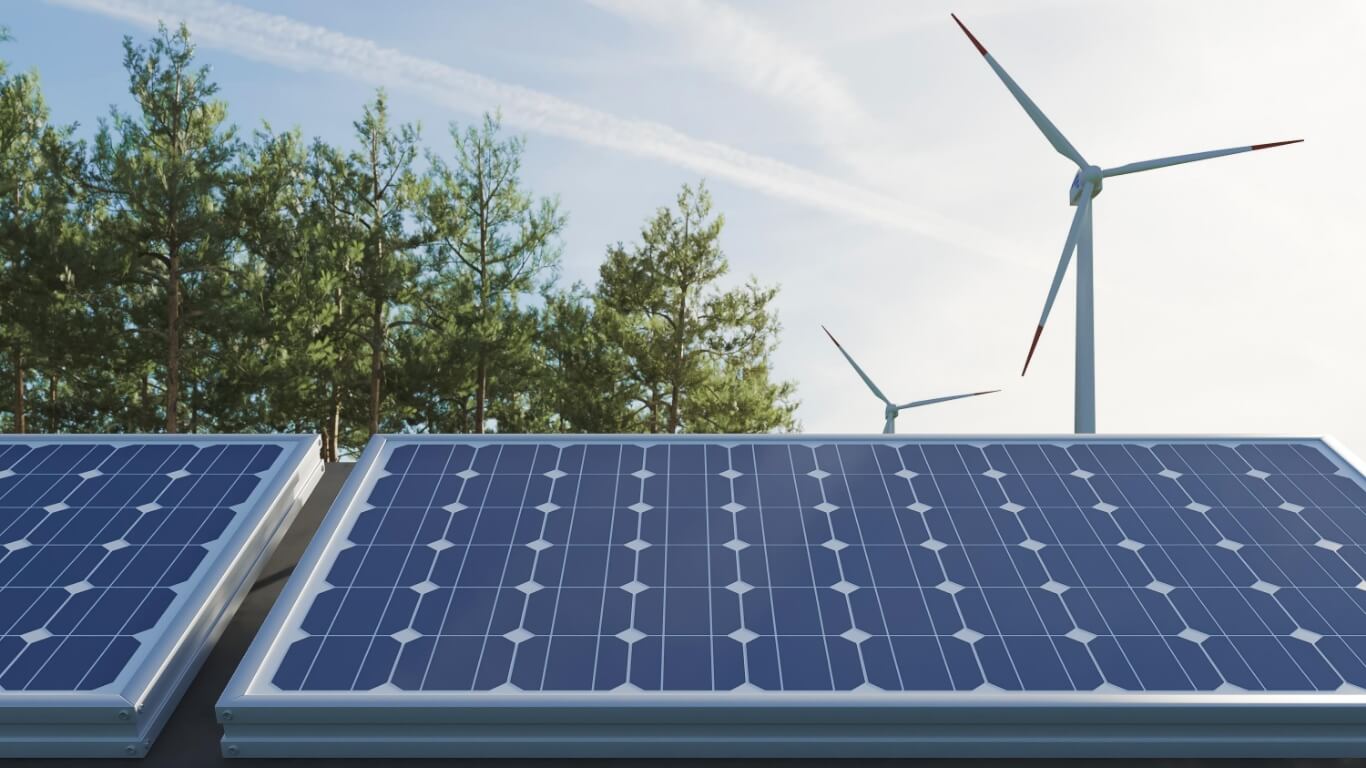
- Sustainable Design and Infrastructure: Green building materials, smart water systems, solar panels, and green roofs are not only good for the environment – they are good for investors. Green buildings, certified as such, have proven to generate more rental and resale value compared to conventional buildings.
- Social and Emotional Wellness: Designing for psychological wellness is becoming as important as it is for physical well-being. Social gathering spaces, community spaces, co-working spaces, and quiet spaces all factor into resident well-being. They combat loneliness and promote a feeling of belonging—a critical aspect of contemporary living.
- Access to Nature and Movement: Parks, jogging trails, and nature information with nature failure society improve physical welfare as well as emotional health. The study indicates that even 15 minutes in nature can reduce the levels of cortisol (stress) dramatically.
The Investor Spin: Future-Proofing with Wellness
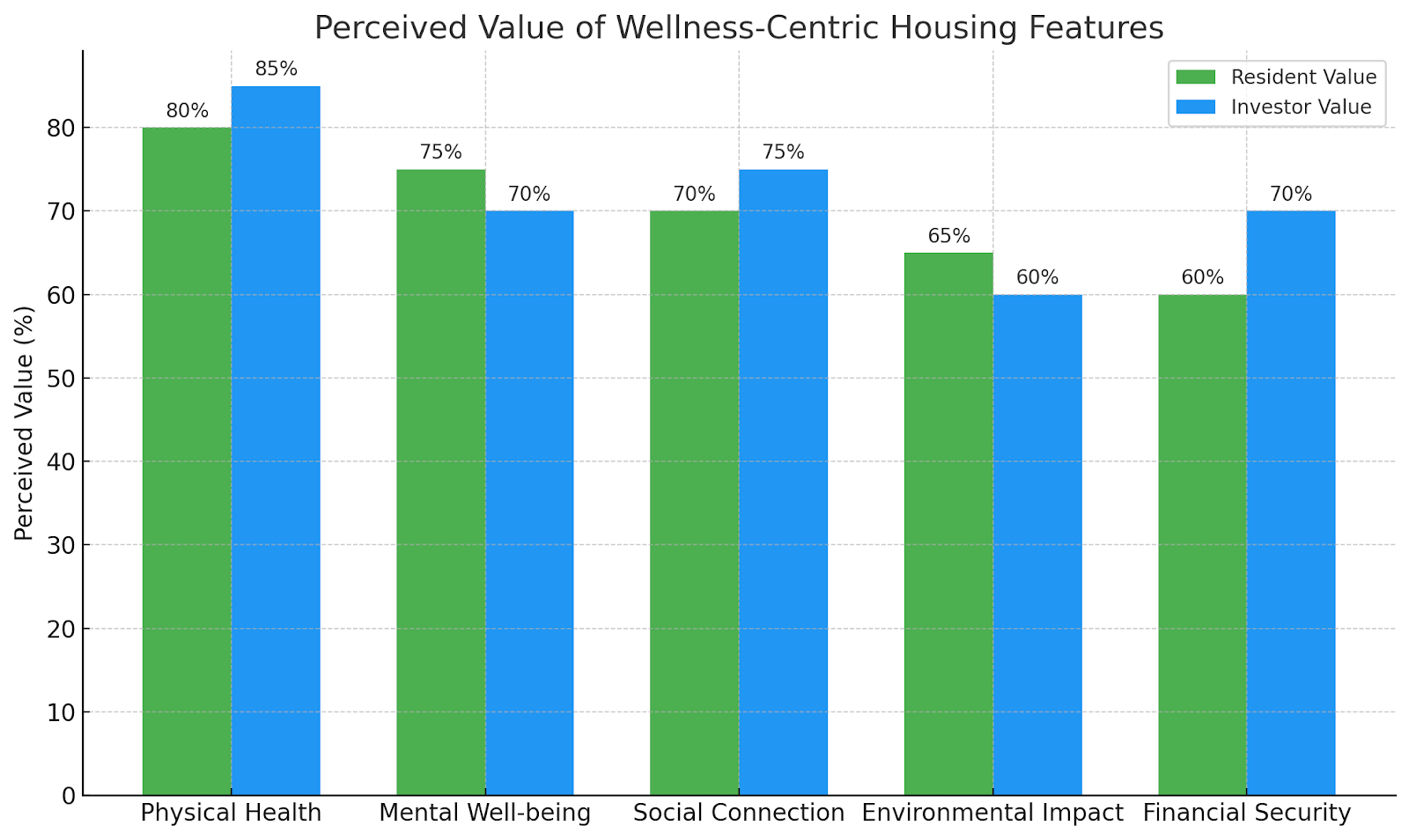
For investors, wellness communities are a future-proof investment. With more individuals focusing on health and happiness over square meters, wellness-focused developments are emerging as a choice of preference.
Even rental properties with wellness features are seeing fewer vacancies. According to a Deloitte report, rental units with wellness amenities in the U.S. had an average occupancy rate of over 92% in 2024, outperforming traditional units by a margin of 5 – 7%.
Additionally, support from institutions such as government-backed initiatives and that of the national housing company, like Homz Global in the United States, indicates permanent policy concern with green real estate. This motivates investors and developers to transfer the portfolio to the wellness-based models for socially oriented and health-based housing.
Final Thoughts
In a world that is more and more health-conscious, the wellness community is no longer a luxury but a need. The neighborhoods that focus on welfare, produced in harmony with nature, promote a sustainable lifestyle and provide authentic social functions that not only enrich life, they also provide investors a solid, durable return.
This thoughtful balance of well-being and investment makes the wellness community a meaningful choice for both the consciousness and the wallet.
Source

























Post By Homz | October 6, 2022
Housing-healthcare-hospitality integration for prosperous communities